Showing posts with label Syria Uprising. Show all posts

Sunday, February 02, 2014

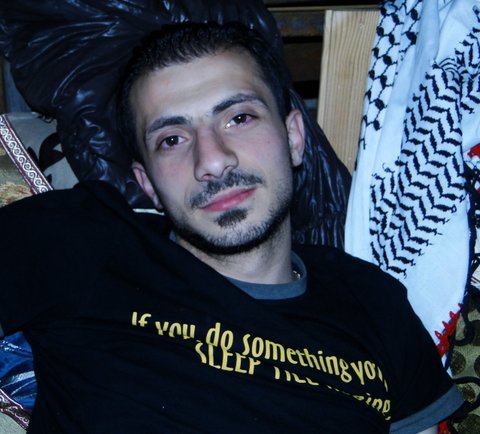
RIP Khaled Bakrawi


Khaled Bakrawi was a 24-year old activist from Yarmouk Camp, born and raised in Syria but originally from Lubya, Palestine that was ethnically cleansed in 1948. Khaled Bakrawi played an integral role in rallying the masses in the struggle for justice. He was one of the founders of the Jafra Foundation and was extremely active in the Palestinian Youth Movement. During the commemoration of al-Naksa in 2011, Khaled was injured when Israeli Occupation Forces opened fire on the protestors. Despite his wounds, he remained steadfast in his struggles and organized for the internally displaced that made their way into Yarmouk. Khaled Bakrawi had been missing, thought to be in Assad’s jails, since January 19, 2013. This was confirmed on September 11, 2013 when news arose that he had been tortured to death.


Tuesday, January 21, 2014

Evidence of torture and execution of Syrians (GRAPHIC IMAGES!)

Three lawyers (Sir Desmond de Silva QC , Professor David M. Crane & Professor Sir Geoffrey Nice QC), wrote a report into the credibility of certain evidence in regards to torture and execution of citizens incarcerated by the Syrian regime.  Both the Guardian and CNN wrote articles publishing the report alongside key findings and images.

The following images are from the report which were leaked by a source named "Caesar" who worked in the military police in Syria for 13 years before defecting. The images were taken either by himself or his colleagues in his unit.


"Each body in the photographs seen by CNN had a number written on it; a person's hand can often also be seen holding a piece of paper in the frame of the photograph with the same number written on it."
The following text taken from the report details the process and the reasoning behind the photographs:
The procedure was that when detainees were killed at their places of detention their bodies would be taken to a military hospital to which he would be sent with a doctor and a member of the judiciary, “Caesar’s” function being to photograph the corpses. He informed the inquiry team that there could be as many as fifty (50) bodies a day to photograph which required fifteen to thirty minutes of work per corpse. The purpose of documenting the corpses was to ensure that none had been released by the security services and to inform the families of murdered detainees in due course that the cause of death in each case was either a “heart attack” or “breathing problems” and to satisfy the authorities that executions had been performed. Each murdered detainee was given two numbers with only the intelligence service knowing the identities of the corpses. The procedure for documentation was that when a detainee was killed each body was given a reference number which related to that branch of the security service responsible for his detention and death. When the corpse was taken to the military hospital it was given a further number so as to document, falsely, that death had occurred in the hospital. Once the bodies were photographed they were taken for burial in a rural area.

Friday, January 17, 2014

Protest videos (17/01/2014)

Here are some videos of today's protests in Syria.

Dael - Daraa province (17/01/2014):


Saqba, Damascus Suburbs (17/01/2014):


Erbeen, Damascus Suburbs (17/01/2014):


Killi - Idlib province (17/01/2014):


Sarmada - Idlib province (17/01/2014):


Kafrnbel - Idlib province (17/01/2014):


Monday, September 16, 2013

Syrian militia trained in Iran


Interesting how even the Iranians have picked up on how the Assad's army operates by force not respect.

For all those anti imperialists who are calling out "Hands off Syria", why are you not protesting against Iranian and Russian interference in Syria?

Thursday, July 11, 2013

Ramadan Kareem

I haven't posted anything in a while primarily because I needed a break from constantly reading and watching anything Syria related. Time has passed quickly and Ramadan has arrived, quicker than I anticipated so I'm slowly dragging myself back to posting and maybe tweeting, so here's a video of a protest from Raqqa last night (10/07/2013):


Ramadan kareem to all.

Sunday, March 24, 2013

The Art of Surviving

The following video is from one of Damascus' suburbs where one man describes how they use the shells and rockets that fall on the town to benefit the residents. This is beyond awesome :-) 


Friday, March 08, 2013

Enough said...


Fleeing Syria for their lives

A series of photographs were published in Aljazeera by Brian Sokol for UNHCR where the photographs show the most important object that these refugees fled with, on a day the numbers of refugees touched one million. These photographs portrays the personal stories of 13 refugees and their families which illustrates the extent to how Syrians have suffered; imagine these 13 stories turned into a million, the consequences are catastrophic. Yet none of the pictures contain any violence, weapons, blood or injury, just people with their memories, hopes and dreams. It's these ordinary everyday people who are being affected.


Hisham, 37, and his family fled Syria early in 2012, paying a smuggler $1,100 to take them across the border. The most important thing Hisham was able to bring with him is the photograph of his wife that he holds here. "This is important," he says, "because she gave me this photo back home before we were married, during the time when we were dating. It always brings me great memories and reminds me of my happiest time back home in Syria."

Yusuf and his family fled their home several months before this photograph was taken. The most important thing he was able to bring from Syria is the mobile phone that he holds in this photograph. "With this, I'm able to call my father. We're close enough to Syria here that I can catch signal from the Syrian towers sometimes." The phone also holds photographs of family members who are still in Syria, which he is able to keep with him at all times.


Neda, approximately 100 years old (age between 90 and 107 according to family members), fled from her home last December when the apartments surrounding hers were destroyed. Crossing the border into Iraq was a very difficult process for her, and the journey on foot lasted the better part of a day. The most important thing she was able to bring with her is the ring that she displays here. When she was ten years old, her mother gave it to her from her death bed, saying, "Keep this ring and remember me."

Mohammed, 70, and his family fled Syria when their family home in Damascus was destroyed by a bomb. They escaped in the back of a truck after covering themselves with plastic sheeting. The most important thing Mohammed was able to bring with him is the cane that he holds in this photograph. He says that without it, he wouldn't have been able to make the two-hour crossing on foot to the Iraqi border.

Abdul and his family fled from their apartment in Syria after his wife was shot in the street during cross-fire between armed groups. The most important thing he was able to bring from Syria are the keys to his home that he holds in this photograph. Though he doesn't know whether the family's apartment is still standing, he dreams every day of returning home.


Abdullah, 43, the imam of the only mosque in the refugee camp he lives in in Iraq, fled with his family after being warned that armed groups were searching for him. The most important thing Abdullah was able to bring with him is the Koran that he holds in this photograph. As an imam, he says religion is the most important aspect of his life.

Tamara's home in Syria was partially destroyed in September, and the family decided their best chance of safety was to reach the Syrian-Turkish border. "When we left our house, we felt the sky was raining bullets," Tamara recalled. "We were moving from one shelter to another in order to protect ourselves." The most important thing that she was able to bring with her is her diploma. With it she will be able to continue her education in Turkey.


Ahmed, 82, and his wife Fatima, 67, fled from their home in August 2012 after their neighbour was killed for asking soldiers why they had executed his son. The most important thing Ahmed was able to bring with him from Syria is his wife. "She's the best woman that I've met in my life," he says. "Even if I were to go back 55 years, I would choose you again."


Marwa, 8, and her family arrived in a refugee camp in Iraq by foot. She says she wept as she made the journey through the cold, over a rough trail, as her mother carried her and her baby brother. She is now attending school and says that she finally feels safe. The most important thing she was able to bring with her when she left are the bracelets she displays in this photograph.


Iman, 25, decided to flee with her son and daughter when she heard accounts of sexual harassment against women in her home city in Syria. The most important thing Iman was able to bring with her is the Koran that she holds here. She says religion is the most important aspect of her life, and that the Koran gives her a sense of protection. "As long as I have it with me, I'm connected to God," she says.


Amina, 9, lives with her family in an uninsulated, partially constructed home in Iraq. About 30 people share the cold, drafty space. The most important thing Amina was able to bring with her are the jeans that she holds in this photograph. She has only worn the jeans three times, all in Syria - twice to wedding parties, and once when she went to visit her grandfather.


Salma, 24, and her family were forced to flee their home last summer. Confined to a wheelchair and blind in both eyes, she says she was terrified by what was happening around her. Salma says the only important thing that she brought with her "is my soul, nothing more - nothing material". When asked about her wheelchair, she seemed surprised, saying that she considers it an extension of her body, not an object.


Abdulaziz, 37, fled his home in Syria the night his neighbors were killed. The next day he used the majority of his savings to hire a truck to flee with his wife and his two sons. The most important thing that he was able to bring with him is the instrument he holds here. It is called a buzuq and he says that "playing it fills me with a sense of nostalgia and reminds me of my homeland".


* The above names used for the people in the photographs, are not their real names.

Sunday, March 03, 2013

'Inside Syria - Syrian Diaries'

Five Syrian women tell their personal stories of revolt and war. Filmed mostly by the women themselves over a period of seven months in 2012, this documentary provides unique insights into how Syria's conflict has transformed their lives.


Wednesday, February 06, 2013

Singing for freedom

The following video shows a 12 year old girl leading a protest in Aleppo. Later on the video, she sings alone for the camera...then a shell falls on the neighbourhood...

Tuesday, February 05, 2013

Kheetaam Benyan's detention


Kheetaam Benyan narrates the story of her detention:

"I was set free from the detention 22 days ago. People used to ask me lots of questions and then tell me few days and you will forget everything you have seen there and you will be fine. I am close to a state of hysteria because of what I have seen in the prison. However, I will not forget.

I won’t forget Um Taiyyem, 25 years old, who was recalled to the officer desk twice at two in the morning. And she came back totally unconscious because she was raped savagely twice!! I won’t forget her face and her appealing to God at night.

I won’t forget the face of Muna Alwadi when they informed her that she is going to be executed at 10 in the morning.

I won’t forget the face of Walla Alkayyal, 20 years old, when she asked me to check her back after being beaten harshly. I won’t forget the bruises on her back.

I won’t forget Ilham body shaking, when the epileptic seizure strikes her for the first time due to torture. I won’t forget when the jailer cursed her thinking she was acting and not shaking because of the seizure!!

I won’t forget Thanaa Hassan when she was unable to breath because of blood clot. We were all screaming asking for a doctor.

I won’t forget the tired faces of Samira, Muna, Thanaa, Um Taiyyem, Sarah and Abeer who are still alive but dead in the prison. I am free now and I am the only voice they have outside."

Tuesday, January 22, 2013

A protest video from Hama

I watched this protest and felt compelled to share. It's just one of those times when my heart melts whilst watching the protest and I felt beyond proud of the Syrians who are protesting. I wish beyond anything I could join them.

Enjoy :-)

This protest is from Sheikh Anbar neighbourhood of Hama this evening (22/01/2013).

Monday, January 21, 2013

Muhammad Abu-Ale'oon Mahameed


"They put me in the freezing morgue while alive, my greetings of peace to my mother".

These were the words written by martyr Muhammad Abu-Ale'oon Mahameed as Assad's forces put him by force into the morgue when he was bleeding!! He wrote his last message by his own blood for the world to see.

Sunday, December 16, 2012

A protest video from Daraa

I wanted to share the following video taken from a protest from Daraa on 14th December 2012.


I love watching these protest videos. Syrians remain united and defiant against the regime as well as showing solidarity with their fellow countrymen. I love seeing the humour come out of protests as well as seeing the acts of bravery and courage. Despite months of brutality at the hands of the regime, these awesome people can show such amazing strength, courage, unity, humour and are admirable in so many ways. They survive and continue to resist the regime with such determination, it's beyond amazing. Every time I watch the protests with the numbers who attend are in the tens, hundreds or thousands, I watch with awe and fascination and hope that the future that we build will make them proud. 

Whenever I feel pessimistic about the future, I return to watching these videos, because each time they remind me that we must stay strong, hopeful and united...we must keep working together, must keep providing support until the regime is over...if amongst all the shelling, the arrests, the deaths, the sadness, they can show such amazing character and remain defiant and hopeful, then we all can. 


Thursday, August 02, 2012

We've resigned our humanity

Kofi Annan has resigned from his UN-Arab League peace envoy for Syria post and has asked that his mandate not be renewed when it expires on 31st August 2012.

Thank you Kofi Annan. If only the men, women and children of Syria are able to choose to resign from their daily dose of shelling and gunfire along with their constant worries and fears of their family's safety.

People should realise it is all of our's duty to humankind to do our best to protect every single soul in danger of their life. Each one of us has a responsibility to continue every moment of every single day until this damn regime is down, to protect the people of the land. Just because so far, things haven't worked out the way you planned, does not mean you give up, but rather you change the plan and work at it again until all this bloodshed, torture, violence, shelling and shootings, arrests and deaths end.

Monday, May 07, 2012

They burned my heart

On 2nd May 2012, Human Rights Watch (HRW) released a article - 'Syria: War Crimes in Idlib during peacce negotiations' containing a link to the 38-page report "'They burned my heart': War Crimes in Northern Idlib during peace plan negotiations," which documents dozens of extrajudicial executions, killings of civilians, and destruction of civilian property that qualify as war crimes, as well as arbitrary detention and torture. The report is based on a field investigation conducted by Human Rights Watch in the towns of Taftanaz, Saraqeb, Sarmeen, Kelly, and Hazano in Idlib governorate in late April.

HRW also released the following video that coincides with the report.

Sunday, May 06, 2012

Barbara Walters Interviews Bashar Al Assad

I had this post saved in my drafts for months, which I wanted to share and add further information to it, like a transcript and other videos related to it. I may as well post now, since there may be a few people who haven't seen this video. When I have the time, I may add other bits to this post.

The following video is Bashar's full length interview with Barbara Walters that took place on the 7th December 2011 (the interview starts at 1:10 in the video). I'm adding it mainly for future reference.